институт европы российской академии наук

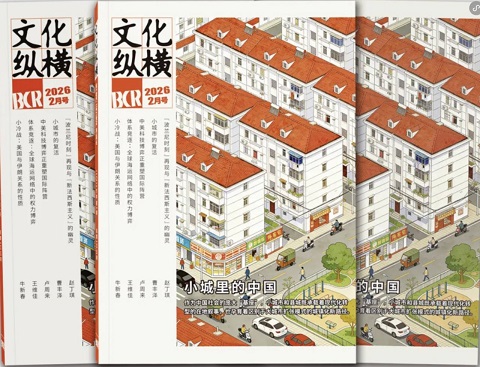
Статья в журнале «Beijing Cultural Review»
- 12 февраля 2026
В Китае, в научном журнале «Beijing Cultural Review» (CSSCI source journal) вышла статья в формате научной дискуссии между член-корр. РАН Ал.А. Громыко, директором Института Европы РАН, и Чжао Хуашеном, профессором Института международных исследований Фуданьского университета, членом Пекинского клуба международного диалога.
Материал опубликован на китайском языке (можно ознакомиться по ссылке ниже).
Также приводим оригинальный текст материала на английском языке.
____________________________
Will Russia Return Back to Europe?
A. Gromyko
Director of the Institute of Europe at the Russian Academy of Sciences, RAS Corresponding Member
Zhao Huasheng
Professor at the Institute of International Studies, Fudan University, Expert of the Beijing Dialogue
In his conversation with Professor Zhao Huasheng, professor A. Gromyko shared his insights and views on a series of major issues concerning Europe and Russia-Europe relations. Some of his perspectives are different or even contrary to what is commonly heard and read, such as on whether Russia is returning back to Europe or moving towards Asia, which reflects the diverse schools of thought within the Russian academic community.
Professor A. Gromyko's grandfather was the renowned Soviet diplomat Andrei Gromyko, who served as the Soviet Foreign Minister for 28 years.
Zhao Huasheng:
After the break of the Russia-Ukraine conflict, there has been a prevailing view in the Russian academic circle that the window to Europe opened by Peter the Great has closed, and Russia has left Europe for good, never to return. Further, there is an opinion that Russia will turn to the East, to Siberia, considering it as the spiritual home and source of wealth for Russia, and the foundation for the country's future development. What is your opinion on this issue?
A. Gromyko:
This particular Russian academic circle is one of several. To be more precise this is a view of a certain part of the Russian expert community, which is not dominated by researches from the Russian Academy of Sciences.
It is important to hold in view that the narrative of the “window to Europe” having been closed is a reflection of the current geopolitical situation in the world and geopolitics is a fair-weather friend. It may be a very different affair, say in 20 years time. The historical truth is that politics is the art of the possible. Peter the Great at first tried to develop his own “turn to the South” not to the “West” when he launched the Azov campaigns, mainly unsuccessful. Only afterwards he concentrated on the competition with the Sweden empire. As a result Russia became one of the main European players. Many years later Catherine II fulfilled the initial plans of Peter when the resources of the country, its economy and the military were ready for that.
For 30 years after the collapse of the Soviet Union a new Russia went to great lengths to forge a new partnership with the collective West including with the European West. Partly it was a success story but the whole project was undermined by the security dilemma and the ignorance of the West towards the core of Russia’s requests and later demands — to stop the expansion of NATO towards the Russian borders and to stop meddling in the domestic affairs of the countries in the post-Soviet space.
The current “turn to the East” is a fully substantiated and logical step, which is a strategy not tactics. This is not Russia’s castles in the air but a reality of the modern world — the political and economic pivot of international relations in the past decades has been shifting to the East. This is what we call the growth of the polycentric world, which in its turn is a new twist of the law of history called the rise and fall of the great powers.
Let me also quickly add three things. About leaving Europe — Russia cannot leave herself because the most developed and densely populated part of Russia lies in Europe.
Secondly, Europe is not a single whole, there are dozens of countries and quite a few organisations and they should be dealt with in a differentiated way.
And thirdly, Russia is one of the leading global centres of power and one of the distinct features of a global centre of power is a foreign policy, which is conducted in all directions. China also is an example of such a global centre, which tries to develop pragmatic and beneficial relations with all parts of the world including the West.
Zhao Huasheng:
I agree with your perspective that Russia is inherently part of Europe in terms of geography, history, culture, and religion. From this standpoint, Russia and Europe are inseparable. The notion of Russia leaving Europe can only be understood in political, economic, diplomatic, and security terms. At this level, distancing itself from Europe or even decoupling is possible. However, even within this dimension, I believe that neither practical necessity nor rationality would allow Russia and Europe to remain permanently separated. To a significant extent, this depends on political relations. Once political ties normalize, connections across all fields will naturally resume.
We know that the debate between Westernizers and Slavophiles has persisted in Russia for two centuries, with neither side able to convince the other. Whenever Russian society faces a major turning point, this debate resurfaces in different forms. However, this time there seems to be little contention. Does this mean Russian society has reached a basic consensus on this issue, that this century-long debate has finally found its answer? Compared to other periods in history, what distinguishes of the current debate?
A. Gromyko:
The millennial history of Russia, its diversified culture, the huge landmass which lies both in Europe and Asia and other factors for centuries have been inviting thinkers and philosophers to deliberate on Russia’s identity. But to juxtapose the debate of Westernisers and Slavophiles of the XIX century with the current phase of history would be misleading. The world stopped to be Eurocentric after the WWII and it stopped to be West-centric by now. Russia experienced transformation from the empire to the USSR and then to modern Russia — the journey which is characterised by continuity not more than by novelty.
The core of the matter is what strategy a country should pursue to develop in an efficient way. These days it is impossible for a global power to succeed on a basis of any kind of a lopsided orientation (western, eastern, southern…). A winning strategy should be multifaceted and open to all parts of the world. This world is not the one separated into blocks or camps, this is a globalised world in which everybody depends on each other. So, “Westernizers vs Slavophiles” would be a too simplistic and rigid pattern of thinking to chart the course in the rough waters of modern international relations.
Zhao Huasheng:
You mentioned that Europe is no longer the center of the world, and now the West as a whole is no longer the center of the world either. Therefore, the mindset characterized by the opposition between Westernizers and Slavophiles has lost its foundation. This is an important argument. Russia's current situation differs significantly from that of the 19th century. In the modern sense, the Westernizers-Slavophones debate functions more as a political symbol—a concise encapsulation of two ideological currents guiding national development. In this regard, it retains value as an explanatory framework. Yet as a mindset and political doctrine, it represents a dogmatic, all-or-nothing “single-headed eagle” policy—instead of the double-headed eagle on the Russian coat of arms-which clearly not the optimal approach.
Russia now defines itself as a nation-civilization. Having existed for a long time both as a nation and as a civilization, why has it only now established this nation-civilization identity? What are its background and implications? This identity affirms the uniqueness of Russian civilization. Where, then, does this uniqueness manifest? What fundamental attributes distinguish it from Western European civilization?
A. Gromyko:
What is being now developed in Russia is the discourse of a state-civilisation. Indeed, there is nothing new in the narratives of the statehood of Russia rooted in 862 and its civilisational uniqueness. However, the latter is a more complex phenomenon, which cannot be described in simple terms neither in straightforward chronological way.
In the domaine of science there are many theories of civilisations and their definitions. There is even no consensus on the interrelationship of a civilisation and culture — according to a number of classical interpretations the first is based on the second and according to other interpretation they contradict each other.
There are many uncertainties in almost all discourses on civilisations. What is a European civilisation? To what extent does Russia belong to it? Is the USA a distinct civilisation? Is there a Western civilisation or is it geopolitics painting itself as civilisational studies? Are there an African civilisationor a Latin American one? Is the phenomenon of civilisation based on territorial location or on religion or on ethnicity or on language or on a certain mixed identity which cannot be reduced to any of these?Usually the uncertainty increases when a certain vision of a civilisation wants to embrace an increasing number of states and it gets clearer the other way around.
From this point of view there are few people who would object to the notion of the Russian or Chinese or Indian or Iranian civilisations. What is new nowadays is to promote the thesis of a state-civilisationon the official level. In ideological terms its significance can be compared with the vision of Russia as the Third Rome after the fall of the Byzantine empire in the XV century or with the vision of Russia as a repository of the communist ideology, which after 1917 was supposed to transform the world on different principles.
It is clear that the civilisational marker serves first of all to streamline the vision of your own identity and at the same time to present your identity credentials to the outside world. Secondly, if you establish a certain number of existing civilisationals on the level of states then you may proceed to instrumentalise it in order to manage and to develop relations with them. But along the way a number of questions appear. For example, in what cases the political application of civilisational identity may help states to cooperate or may lead to additional frictions? If civilisational identity is a privilege of the few, how can it influence their relations with all the others? In a nutshell a concept of a “state-civilisation” is a very important one and should be developed further although in a cautious and considerate way.
Zhao Huasheng:
Civilization is a concept that defies exhaustive definition. The issue of civilization's “instrumentalization” you raised is thought-provoking. On one hand, shared civilizational identities can foster cooperation among nations; on the other, they may also become sources of friction and conflict between states. While there is no consensus on the once-popular “clash of civilizations” theory, this phenomenon appears to be intensifying in contemporary international politics, demanding further scholarly inquiry.
Russia is both part of European civilization and an independent civilization in its own right. While terms like “dual civilization” or “secondary civilization” may attempt to explain this duality, the concept remains elusive and difficult to fully grasp. Russia's frequent hesitations and vacillations on its path of national development are likely connected to this very ambiguity.
After the Russia-Ukraine conflict ends, can reconciliation be achieved between Russia and Europe? Throughout European history, wars have been incessant, with long-standing and deep-rooted conflicts persisting among many major European powers. Countless battles were fought, such as between Britain and France, Germany and France, and between these nations and other European states. Yet after World War II, Europe achieved a historic grand reconciliation. Why, then, has reconciliation between Europe and Russia proven so difficult. Moreover, their conflicts are even becoming deeper and the conflicts more intense.
A. Gromyko:
History moves quickly and each time in a new direction. It teaches us that in international relations there are no eternal friend and enemies unlike eternal national interests. But what distinguishes major powers from the others is their willingness and ability to forge friendly and pragmatic relations with as many countries as possible and to provide themselves with a stable international environment, first of all in their neighbourhood. This is true that different parts of Western Europe managed to escape the vicious circle of neverending rivalry after WWII constructing the edifice of regional integration.
By the way, let’s not forget that they succeeded only after the Soviet Union crushed the Third Reich. The USSR also played a leading role in ending the Cold War including the unification of Germany and later a new Russia for a long time was sincere in its desire to forge strategic partnership with major Europeans countries and the EU. Alas, Europe as a whole 35 years after the end of the Cold War stays a deeply divided place. Again I would repeat that the main the reason for that is the security dilemma and also would add the factor of the US meddling in and influencing the European affairs, which mostly has been negative in terms of Europe’s policy toward my country.
Zhao Huaseng:
Following the end of the Cold War, a historic opportunity for a grand reconciliation emerged between Russia and Europe. Russia's desire to integrate politically, economically, and in terms of security into Europe had never been stronger. Regrettably, Europe missed this opportunity. Not only that, but Europe instead exploited this moment to impose maximum strategic containment on Russia. This historical misstep has led to the disastrous consequences we see today.
What do you believe is the most likely—not the most desirable—future model for Russia-EU relations? Is a return to Cold War-era patterns feasible? Is a revival of the Helsinki spirit possible? Is rebuilding a common European security space realistic? Europe was once Russia's largest trading partner, and Russia was Europe's primary energy supplier—these were the strongest material ties binding the two. The Russia-Ukraine conflict has severed these bonds completely. Can they be restored after the conflict?
A. Gromyko:
There is no “never” in history. Former enemies become partners and former friends fall apart. However, the current state of minds in Western and Central Europe is extremely anti-Russian and is a deliberate longterm policy. At the same time there are European states and different political movements in a majority of countries in Europe, which do not see a confrontation with Russia as a viable and desirable strategy. We’ll see how things evolve after the end of the Ukrainian crisis. If this happens in 2026 then I would foresee that a process of de-escalation and partial normalisation will be faster then many observes presently predict. And this is not because of some affinities, historical or cultural commonalities (although where they are present we should support such factors) but because of rationality, common sense and pragmatism.
Zhao Huasheng:
I agree with your perspective that after the Russia-Ukraine conflict concludes, relations between Russia and European nations may gradually return to normal—the question lies only in the timing. However, the conflict has caused such profound divisions in mutual perceptions and psychological rifts between Russia and Europe that the opportunity for them to merge into a community and achieve a grand reconciliation will not reappear in the foreseeable future. In this new environment, Russia and Europe must engage in innovative exploration of their future relationship, seeking forms suited to the new reality.
For many years, promoting European strategic autonomy has been one of Russia's objectives in its European policy. Its fundamental rationale has been to counterbalance the United States, believing this would divide the Western bloc, weaken America, and enable Europe to emerge as an independent pole—thereby advancing global multipolarity. However, it now appears that after achieving strategic autonomy, Europe may not become a counterweight to the United States but rather a new counterweight to Russia. Indeed, Europe's anti-Russian stance has already surpassed that of the United States. This suggests that Russia-Europe relations may deteriorate rather than improve after Europe gains strategic autonomy. Under this scenario, do you believe Russia should still support Europe's strategic autonomy?
A. Gromyko:
The strategic decoupling of the US and their European allies is an objective factor of life and this is all about the global economic, technological and political dynamics. This is happening independent of what Russia does. However, I would concur — that is in Russia’s interests that the European West is not so dominantly dependent on the opposite side of the Pond irrespective of what particular policy towards Russia- Washington or the leading European capitals pursue at each separate moment in history. As to the idea of a major shift in the US relations with Russia, I would not be in a hurry to jump to such conclusions. The current stage of our bilateral relations is in a very precarious mode and may go in different, even opposite ways. In my opinion, Moscow is pursuing the most optimal line — we are ready to restore beneficial relations with the US and with our European neighbours as well on the basis of respect, national sovereignty and pragmatism.
Zhao Huasheng:
Europe's strategic autonomy is more likely not a proactive self-choice but a result of external pressure—namely, the pressure stemming from U.S. policies and shifts in transatlantic relations. Europe faces formidable obstacles in achieving strategic autonomy. Beyond other challenges, Europe is not a single nation-state. Its internal interests diverge, its relationships are complex, it lacks a universally accepted leading nation or leader, and it risks fragmentation. Nevertheless, Europe is now stumbling along the path toward strategic autonomy. It will remain a significant player in international politics, and is likely to become increasingly prominent and independent.
How NATO will evolve after the Russia-Ukraine conflict concludes is a matter of significant interest. The current situation is that, on one hand, the United States may reduce its military presence in Europe, while on the other hand, Europe is also considering establishing an independent defense system. Both of these developments will weaken NATO's position, which is not good news for the alliance. At the same time, the Russia-Ukraine conflict has been a major factor in uniting NATO. After the conflict ends, this factor may no longer have such a strong cohesive effect. How do you assess NATO's future development?
A. Gromyko:
NATO is a hangover of the Cold War. Objectively, it was doomed after the downfall of the USSR. However, it survived due to a knee-jerk reaction of the West rooted in the habits of the bipolar era of competition between the two superpowers. The lobbing capacity of the Alliance’s bureaucracy and military machine proved to be immense. Interestingly, the extension of NATO’s existence was usually provided by the US, be it the “open door” policy, the bombing of Yugoslavia, undermining the democratic process in Ukraine since the 2000s, inciting Georgia under Saakachvili against Russia or attempts to turn the block into a global military player primarily with China in view.
Now history turns the table. Now the US seems to increasingly ignore its obligations to the Alliance not the European West. However, this is equally true that without Americans NATO is dysfunctional, at least in the near future. Its ultimate de jury or the facto dismantlement would be a logical conclusion of its history. But that would be a far-fetched supposition at the present stage.
By now the US has withdrawn from Europe just a couple of thousand soldiers out of 80 ths. They have kept their commitments to the European theatre in the new military budget. As to the US extended deterrence, these policies seem to be getting stronger not weaker with the Nordic countries being involved in NATO’s nuclear sharing missions as never before and with the UK returning to its soil the US B62 bombs.
Still, if we imagine that NATO in on course of a downfall it would not mean that its demise would remain a void nothing to be filled with. The EU will continue to create its own military potential. The only question which remains to be answered is the following: will this process be a continuation of a longstanding natoisation of Europe or it will change to Europeanisaion of NATO.
Zhao Huasheng:
The Russia-Ukraine conflict has injected a shot in the arm for NATO, completely dispelling any lingering doubts about the alliance's legitimacy and paving the way for further expansion. Yet NATO now faces a new headache: America's attitude toward the alliance. Since Trump took office, Washington's policy toward NATO has undergone a major shift, creating deep fissures within the alliance. The U.S.-Europe divide over Ukraine persists, while tensions have escalated over Greenland, culminating in a standoff between U.S. and British/French forces on the island—symbolic though it may be, it stands as a striking spectacle of NATO's internal fragmentation. Should the U.S. ever withdraw from NATO, it would deal a fatal blow to the alliance. Without America, NATO would cease to be NATO. Although this scenario is not currently feasible, Europe is already considering the establishment of an alternative independent military alliance.
Mutual fear has always existed between Russia and Europe, and it persists to this day. Both Europe and Russia believe the other will attack them. Some European politicians claim Russia will invade NATO countries within the next 3-4 years, while Russia perceives NATO as deploying forces for a potential war against it. Personally, I believe neither side has the intent to initiate war, as a grand war between Russia and NATO is unimaginable. Yet history shows that some wars aren't premeditated—miscalculations can gradually drag nations into conflict, as seen in World War I. Do you think the current war rhetoric between Russia and Europe is merely theoretical speculation, or do they genuinely believe such a danger exists? In the worst-case scenario, could a Russia-Europe war actually happen?
A. Gromyko:
I would not say that such kind of fears have existed always. The Old Continent has never been a United States of Europe with a single security and foreign policy strategy. For centuries all European or world wars in which Russia participated were together with some European states against some European states. Even now several European members of NATO, apart from the USA judging from the latest NSS, do not perceive Russia as a source of military threat.
However, a significant number of European countries, and not just the usual suspects — the Baltic states and Poland, indeed wage an information warfare with Russia accusing it of plans to attack them. The reason for such a policy is fourfold: to try to keep the US in Europe, to inflate geopolitical significance of the warmongering states, to feed the military-industrial complexes and to stimulate European economies which are in the doldrums.
Of course, we should also factor in a certain part of the public, which suffers from, let me put it mildly, a twisted eschatological vision when the whole world can be sacrificed for sake of historical grievances, grand mission, phobia or hatred. Stupidity should not be forgotten neither. For such kind of personalities, be they religious or secular fanatics, a nuclear WWIII is not a hellish end but a futuristic beginning. That’s why, besides other reasons, this is so tremendously important to cherish the NPT treaty and to expect from all N5 states and another four nuclear powers to behave themselves responsibly.
Zhao Huasheng:
It can be said that whether Europe will move toward peace or greater conflict is the most severe challenge it now faces. The best-case scenario is that 2026 will conclude with the end of the Russia-Ukraine conflict and Europe entering a period of peace. Yet dangers lurk beneath the surface of Europe's situation. Before peace arrives, no one can make such a guarantee, nor can they guarantee that a larger war will not occur.
There are differing views on Europe's prospects and its future international standing. Some argue that Europe is terminally ill due to its internal structural contradictions, beyond cure, and that its situation will only worsen. Its decline is inevitable, and it has already relinquished its status as a major power on the international stage. Others contend that Europe possesses profound industrial, technological, and cultural potential, making its revival possible and positioning it among the foremost global powers. What are your views on these issues?
A. Gromyko:
The two volumes of “The Decline of the West” by Oswald Spengler (Der Untergang des Abendlandes), which title in Russia from the start was translated not very correctly (The Decline of Europe), were published in 1918 and 1922 respectively. Since then, as history demonstrated, Europe showed a remarkable resilience.
This is equally true for Russia, which survived the crash of the Empire in 1917 and then the collapse of the Soviet Union in 1991. If we speak about a part of Europe to the west of the Russian boarders then, with no doubt, they find themselves in a situation of a perfect storm. They’ve entered the period of stagnating growth; the public debt has never been so high and will grow further; they’ve severed almost all ties with Russia depriving themselves of relatively cheap and reliable energy supplies and the big consumption market; in many ways they are despised by the USA; they are on the curve of worsening relations with China; they’ve put all eggs in the Ukrainian basket and are in a stalemate as a result.
The national opinion polls speak volumes about the popularity of the political leaders in the UK, France and Germany. By coincidence the same leaders who “enjoy” the support of their electorate in the range of 15-25%, express grand ambitions to remake Europe according to their design. I do believe that Russia, China and the US are going to play a major role in international affairs for many years to come. If the European West is a spoiler in this chapter of history, a looser or a serious player will be clarified in the following years.
Zhao Huasheng:
You spoke of Europe's resilience, yet also of the formidable challenges it faces. My impression is that you believe Europe has the potential to weather these storms and maintain its independent existence, though it will no longer enjoy the status of a major power it once held. Instead, it will find itself relegated to a seat beside the main table occupied by China, Russia, and the United States. Interestingly, Europeans hold differing views on this matter. Take British Prime Minister Starmer, for instance—he too envisions a future world dominated by three major powers, but he identifies them as China, the United States, and Europe, excluding Russia from the equation.
In Russia-EU relations, from a macro perspective, we view Europe as a unified entity. However, from a more granular angle, individual European nations may exhibit divergent approaches toward Russia, with differing priorities in their interests and varying preferences in their Russia policies. Could you elaborate on the distinctive features of the Russia policies pursued by the four major European powers—the UK, France, Germany, and Italy? Conversely, what are the key focuses of Russia's policies toward each of these nations?
A. Gromyko:
This is a one million dollar question, which is difficult to answer in a few words. The composition of the EU now is a motley crew — 27 nations after the UK left the company in 2020. There are major powers and you mentioned the four of them. There are two nuclear powers — the UK and France, which are also the permanent members of the UN Security Council. The united Germany would not exist if the unification had not been supported by the USSR. Quite a few EU members are the former members of the Warsaw Pact and the Council for Mutual Economic Assistance. Three of the EU members are the former Soviet republics (the Baltic states), which harbour the hardcore anti-Russia attitude. Germany and Italy bear stigma of the Nazi and the Fascist regimes.
In the course of the XXth century the Soviet people forgave them and the nations forged close relationship. Paradoxically, now Berlin aspires a pretension to be a leader of the anti-Russia European coalition while Italy plays a much more ambiguous and manoeuvring role. The rivalry between Russia and the UK is rooted in the Great Game in Asia started from the beginning of the XIX century. However, the “big three” of the WWII were Stalin, Roosevelt and Churchill, who laid the foundations of the postwar world including the creation of the United Nations together with France and China. Nowadays London exerts efforts to promote a fair tale “coalition of the willing” in Ukraine with sinister undertones and Macron tries to play a nuclear card offering European allies the French extended deterrence in place of the American one. Everybody understands that this is rhetoric but grandstanding is the only game in town in the contemporary Europe.
Zhao Huasheng:
Historically, Russia's relations with Europe have been multifaceted, encompassing both rivals and allies, allowing Russia to maneuver with considerable flexibility. The current situation is markedly different, with Europe acting almost as a unified bloc against Russia, with the exception of a few countries like Hungary and Slovakia. Nevertheless, differences persist in the attitudes and policies toward Russia among European nations.
We know that one of NATO's founding missions was to “keep the US in”, but this objective has now become problematic. The Trump administration is intending to reduce America's security presence in Europe and scale back its security commitments to the continent. One U.S. lawmaker have even proposed withdrawing from NATO. It can be said that U.S.-European relations are undergoing a historic transformation—a major challenge unprecedented since World War II. Not long ago, German Chancellor Merz publicly stated that the era of American-led peace has come to an end, that transatlantic relations have fundamentally changed, and that Germany and Europe will chart their own course, no longer relying on the United States. What are your assessments of the future trajectory of transatlantic relations? Is it possible that the United States will abandon Atlanticism? Or will its fundamental policy remain unchanged, merely seeking to reconstruct a “cheaper” hegemony?
A. Gromyko:
80 years have passed since the end of the WWII. The world to a big extent has become a different place. NATO was supposed to be dismantled 35 years ago. Now this is not just Russia but the US itself, which puts the rationale of NATO’s existence into question. The European allies of Washington should forget about keeping the US in because the strategic decoupling will go ahead and about keeping the Russians out because of the Ukrainian crisis’ ramifications.
The next decades in global terms will revolve around the US — China competition. The US under Trump tries to abandon the dead-end policy of “double containment” against Russia and China. If the European West is serious about its pretension for strategic autonomy than it should balance its foreign policy with all three centres of power — the US, China and Russia.
At the same time it is obvious that the linkage between Russia and China on the one hand and the US and its European allies on the other will remain much stronger than the one between the two camps. Contemporary China is immune from the “Kissinger rapprochement 2.0” policy and contemporary Russia is immune from a “reverse Nixon” strategy designed to drive a wedge between Moscow and Beijing.
Zhao Huasheng:
The possibility of a complete strategic decoupling between the U.S. and Europe appears unlikely. However, regardless of how U.S.-EU relations evolve, I concur with your assessment that ties between China and Russia, as well as between the U.S. and Europe, will remain far closer than the connections within these two blocs. I strongly agree with your opinion. Both China and Russia possess mature strategic thinking and will not become pawns to be manipulated by others.
In one of your articles, you stated that contemporary Russian diplomacy is a continuation of Soviet diplomacy. Could you elaborate on the key aspects in which Russian diplomacy inherits from its Soviet predecessor? We know that your grandfather, Mr. Andrei Gromyko, was a renowned diplomat who served as the Soviet Foreign Minister for 28 years. His diplomatic career spanned the Stalin, Khrushchev, Brezhnev, Andropov, Chernenko, and Gorbachev's eras, making it a microcosm of nearly half a century of Soviet a Russian diplomacy. I have read his memoir, Never Forget, twice, and it left a profound impression on me. If you are willing, you could also share his deepest reflections on his half-century diplomatic career—what he was most satisfied with and what he most regretted.
A. Gromyko:
During the discussions with the family members about the achievements of the Soviet diplomacy my grandfather would usually distinguish among dozens of things the establishment of the United Nations in 1945, the recognition of the postwar borders in Europe embedded in the Moscow Treaty in 1970 and Helsinki Final Act in 1975 and the creation of the arms control mechanisms centred on the bilateral Soviet-American strategic stability pivot in the 60s and 70s.
For Andrei Gromyko the first tier of the country’s security and stability was the immediate neighbourhood (Near Abroad in the present days terms), and then the friendly governments in the Third World (morphed since then into Global South) and beneficial relations with major capitalist countries, which put together is now called the Far Abroad.
Modern Russia does not have all the resources of the USSR but it is the successor-state of the Soviet Union, the permanent member of the UN Security Council and one of the two nuclear superpowers together with the US.
Andrei Gromyko warned Khrushchev about politically devastating consequences of the deployment of the Soviet missiles in Cuba in 1962, he was trying to transform détente with the West into a longlastingprocess and for several months before the final decision was taken by Politburo he was against the deployment of Soviet troops in Afghanistan in 1979.
In 1984 he paid his final visit to the United States and met with Ronald Reagan to discuss restoration of strategic communication between the two superpowers. This paved the way for a new opening in the arms control negotiations between Moscow and Washington, which later, in 1987, resulted in signing of the INF Treaty.
Andrei Gromyko was an ironclad supporter of the strategic buffer zone in Europe between NATO countries and the USSR, guaranteed by the belt of the Soviets’ allies, and considered it as a sacrosanct result of the Victory in the Great Patriotic War against the Nazi and Fascist regimes won at a price of 27 million Soviet lives.
My grandfather passed away in July 1989, 18 months before the downfall of the Soviet Union. It is clear that he would be a fervent opponent of the politics and policy, which have permitted NATO’s eastward expansion up to the borders of my country threatening it with regional and strategies vulnerabilities.
Zhao Huasheng:
You mentioned that Mr. Andrei Gromyko regarded the founding of the United Nations, the recognition of the postwar borders in Europe, the Moscow Treaty in 1970 and Helsinki Final Act in 1975 and the creation of the bilateral strategic arms control mechanism between the Soviet Union and the United States as the major achievements of his diplomatic career. These indeed constitute integral parts of the post-World War II international order. Regrettably, the fruits of immense effort and hardship achieved by the older generation of diplomats have now almost totally been destroyed. What has been lost is precisely what we hope to rebuild in the future—yet rebuilding will be exceedingly difficult. Moreover, with the passage of time and changing circumstances, reconstruction may well prove impossible for foreseen future!
Mr. Andrei Gromyko's generation lived through World War II, bearing firsthand witness to the cruelty and suffering of war and understanding its true meaning. His famous adage—“Ten years of negotiations are better than one day of war”—remains particularly relevant to contemporary international politics.